
Key Takeaways
- ADA signage for schools, clinics, and offices is essential for accessibility and must feature tactile characters, Braille, as well as high-contrast colors and non-glare surfaces to accommodate individuals with diverse visual requirements.
- Tactile elements, like raised letters and Braille, have stringent size, spacing, and placement standards, making information accessible for all users, including those with low vision or blindness.
- Visual elements, such as compliant fonts and high-contrast color schemes with matte finishes, are crucial for improving readability and minimizing obstacles for people with visual impairments.
- Each building type sees the value of tailored ADA signage for navigation, identification, and safety purposes, and user insights have helped make it more effective.
- Technical specs—character rules, finish, contrast, pictogram design, mounting locations—should be carefully adhered to and updated often to stay compliant with changing ADA standards.
- From integrating emerging technologies like digital displays and sensory integration to implementing regular compliance audits and staff training, forward-thinking ADA-compliant signage solutions stay relevant, effective, and inclusive on a global scale.
ADA signage for schools, clinics, and offices refers to signs that adhere to the AMERICANS WITH DISABILITIES Act standards for accessibility and effective navigation. Every building type has its own needs. Schools utilize ADA signage to assist students and faculty in navigating to classrooms, restrooms, and exits. Clinics require signage that displays patient rooms, waiting areas, and emergency exits in a very clear, legible format. Offices have ADA signs for room names, restrooms, and floors. Proper color contrast, tactile text, and braille allow teachers, students, patients, and staff of all ages and abilities to move with ease. To comply with regulations and assist all, it’s essential to select the appropriate ADA signage for every building type. The lead-in elaborates.
Understanding Core Principles
ADA signage represents a collection of accessibility standards for public spaces, including key ADA requirements such as tactile text descriptors, Braille, and high contrast colors on these compliant signs. By adhering to ADA signage guidelines, schools, clinics, and offices can foster an inclusive environment where all moves with ease.
- Provide information in both tactile and visual formats.
- Ensure signs are mounted at accessible heights.
- Use high-contrast, non-glare finishes.
- Choose fonts that are clear and easy to read.
- Place Braille and raised characters consistently.
- Include international accessibility symbols when needed.
- Regularly review signage for continued compliance.
Tactile Elements
Raised letters and Braille provide essential information to individuals who are blind or visually impaired. These allow someone to read room numbers, exits, or restrooms by touch, making the building easier to navigate.
Checklist for tactile compliance:
- Use embossed characters 1.6 mm above the sign surface.
- Characters must be uppercase, sans serif, and not decorative.
- Braille must be contracted (Grade 2) and directly underneath print.
- Signs need only be 122–152 cm above the floor to the centerline.
Compliant fonts are important. Stay away from fancy or script styles, which are difficult to read by feel or sight. Plain, sans serif fonts such as Arial or Helvetica fare best.
Location cannot be haphazard. Signs have to be adjacent to the door they identify, on the latch side. This makes them easy for users to discover and read without searching.
Visual Elements
High-contrast color schemes assist low-vision users in locating signs rapidly. Dark text on a light background or the reverse works best.
Font size counts, as well. Characters should be at least 16 mm high, spaced sufficiently so that letters don’t run together. Uniform, easy-to-read fonts matter.
Matte is a must. Shiny signs glare and are difficult to read by many.
Visual cues need to combine with haptic elements. When sight and touch align, diverse users receive a clean, consistent signal.
Braille Standards
Grade 2 Braille is common for ADA signs, providing abbreviated words for compactness and efficiency. This is standard in schools, clinics, and offices.
Braille sits immediately beneath the caption. This maintains consistent expectations for users browsing by finger.
Braille dots have to be 1.5–1.6 mm in diameter and spaced apart to facilitate easy reading. This keeps things unambiguous and promotes correctness.
Standards are worth a glance. Changes in ADA regulations require frequent review of signs to remain compliant.
Required Symbols
The international symbol of accessibility (ISA) shall be displayed on signs for accessible entrances, restrooms, or features. We have this icon that’s recognized globally, which signals to people that a space is accessible.
Symbols 150 mm high, in a solid color contrasting with the background. Location has to be uniform and noticeable.
Pictograms can communicate information quickly. A bathroom or elevator symbol assists those users who can’t read the language or have cognitive issues.
See if symbols work. Request user input and refresh to maintain signage relevance.
What Each Building Needs
Each building type presents its hurdles for ADA signage, especially in schools, clinics, and offices where compliant signage is crucial. Specializing in these environments guides everyone—regardless of background or ability—by addressing key ADA requirements like consistent tactile maps and braille signage.
1. For Schools
Schools need to designate rooms, such as classrooms, restrooms, and exits, in compliance with ADA signage requirements. Signs should employ plain language, raised letters, and Braille, ensuring that students, staff, and visitors can locate necessities. Exit routes and emergency signs must be distinct, incorporating high contrast and tactile elements so that anyone can access them, even in a scramble, adhering to ADA sign requirements.
Wayfinding signs direct visitors to gyms, libraries, or the cafeteria. These notices must be within reach and sight of all ages, typically between 1.2 and 1.5 meters from the ground, following the ADA signage guidelines. Use arrows, obvious pictograms, and text large enough for both young children and adults. For instance, a big, basic arrow with ‘Science Lab’ in print and Braille suits every grade, ensuring compliance with tactile requirements.
It’s good to get students and teachers to tell you what works. Getting them involved in designing signs, perhaps through polls or mini focus groups, gives ownership. This approach exposes needs that could be overlooked in other ways, such as color blindness considerations for students with low vision or simple language symbols for pre-literate children.
2. For Clinics
Clinic signs must comply with ADA signage requirements to guide individuals to waiting rooms, treatment rooms, and restrooms without anxiety. Incorporating tactile features and Braille is crucial for patients with vision loss, ensuring that all can understand the signs, regardless of language or literacy. Signs should also include symbols, such as the international symbol of accessibility, to enhance comprehension.
Wayfinding signs that adhere to ADA sign requirements ease stress in emotional clinics. While it may not be possible to eliminate all lines, clear, large-lettered signs at every turn—pointing to “Check-In,” “X-Ray,” or “Exit”—make navigation easier for patients and visitors. Mounting these signs at a height of 1.4m accommodates both wheelchairs and standing adults, ensuring compliance with accessibility standards. Accessible restrooms and entrances should be identified with appropriate words and symbols.
Frequent patient and staff feedback assists clinics in identifying compliance issues before they escalate. Short surveys, suggestion boxes, or quick interviews can uncover fuzzy signage or gaps in information. Conducting accessibility audits with teams that include persons with disabilities provides candid feedback on the effectiveness of compliance signage, allowing clinics to make modifications that benefit all users.
3. For Offices
There’s office signage for workspaces, meeting rooms, break areas, and emergency exits. All clear, all compliant, all nice looking, signs using simple fonts, non-glare finishes, and braille, so every employee and visitor can find their way with ease.
Branding is important, but it should never interfere with entry. A sign can correspond to a company’s colors or logo, but contrast, readability, and proper placement must be paramount. For instance, a conference room sign might include company colors as a border, but the primary text remains high-contrast and tactile. Offices change all the time. New teams, new layouts, or new legal needs can make old signs out of date. Periodic audits, perhaps annually or after significant changes, ensure everything stays transparent and compliant. Having workers tell us what works and what doesn’t keeps signs practical and code-compliant.
Key Technical Specifications
ADA signage is critical to ensuring that schools, clinics, and offices adhere to compliant signage standards, making them accessible and safe for all. Compliance with ADA sign requirements ensures that individuals with disabilities can navigate easily. These requirements are not merely suggestions; they are the law in many places. By following them, you promote accessibility, safety, and inclusivity. All building types—schools, hospitals, corporate offices, etc.—should periodically review ADA signage guidelines, as they evolve.
Character Rules
Font choices affect the legibility and tactile readability of ADA signs. The raised letters have to be a minimum of 1/32 inch (0.8 mm) tall, a specification that facilitates tactile reading. Letter height cannot be less than 5/8 (16 mm) or more than 2 inches (51 mm), as either would impede visibility or tactile reading. Sans-serif fonts—like Arial or Helvetica—are normal because they’re easier to read by glance and touch. Don’t use italic, script, or ornamental fonts because they reduce the speed of recognition.
You want to have the letters and lines spaced properly. Tight spacing can render words illegible, while too much spacing breaks flow and lucidity. For tactile characters, leave a minimum of 3 mm between the tactile characters and the edge of the sign. Refer back to these character rules often because ADA standards evolve over time or with best practice updates.
Finish And Contrast
A matte/non-glare finish is required for all ADA signs. Shiny covers generate glare that can wash out copy, particularly in sunny hallways or artificially lit rooms. Matte coatings enable low-vision users to view and read text without disruption. Minimum 70% contrast between the text and background. Deep contrast makes the sign pop no matter the lighting. For instance, white on dark blue will generally pass this threshold, but light yellow on white will not.
Contrast is not just color contrast but luminance contrast. Try out color combos with contrast analyzers to get them in line. Employees need to be educated about bad contrast and how it affects accessibility. Whenever you are updating or installing new signage, make finish and contrast a routine checkpoint on your compliance list.
Pictogram Design
Pictograms communicate fast, and they are not language-dependent. According to ADA guidelines, pictograms should come within a 15 cm square field. Placement should always be above or next to the text label, never overlaying. Text labels underneath pictograms are always good, particularly for users missing a few icons. For instance, a wheelchair symbol with “Accessible” below it steers clear of ambiguity.
Go over all pictograms. Technology and language,ge and symbols change, so a pictogram that made sense five years ago may be unclear today. Old or unclear designs can confuse and obstruct access. Consistency and clarity trump creative flair.
Mounting Location
Mounting location is crucial for effective signage, particularly when adhering to ADA signage requirements. According to ADA guidelines, the bottom of the tactile text descriptors on a sign should be positioned between 1.2 to 1.5 meters from the finished floor. This height ensures that signs are accessible to the majority of users, including those utilizing wheelchairs. It’s essential to place compliant signage near doors or primary pathways, such as entry signs next to classroom doors and bathroom signs on the latch side, avoiding any obstacles that could obscure visibility.
Regularly checking the mounting locations is vital for maintaining compliance with ADA standards. Renovations, new furnishings, or seasonal decorations can inadvertently hide signs. Keeping records of each sign’s mounting height and position updated ensures both immediate access and ongoing compliance with federal ADA sign requirements.

Common Signage Applications
ADA signage guides people in how to navigate, find rooms, and remain safe in schools, clinics, and offices. Compliant signage, strategically mounted, assists access for all, regardless of ability, following key ADA requirements.
- Room identification for classrooms, clinics, and offices
- Directional signs in corridors, lobbies, and elevators
- Egress path and emergency exit guidance
- Parking space and building entrance indicators
- Elevator and stairway labels
- Rail station identification at entrances and boarding points
- Tactile signs adjacent to or on doors with compliant clear floor space
Room Identification
Room Identification Signs are essential for denoting the purpose of a room, such as “Classroom 101” or “Conference Room.” These compliant school signage labels assist all visitors, including those with vision impairments, in navigation. According to ADA signage guidelines, signs must feature tactile characters, Braille, and contrasting colors to ensure they can be read by touch and sight. The character height should range from 13 mm to 51 mm (half inch to two inches), and a plain font is required, where the uppercase ‘O width is 55%-110% of the uppercase ‘I’ height. Proper mounting is crucial; signs are typically placed on the latch side of the door, ensuring a clear floor space of at least 450 mm by 450 mm (18 by 18 inches) centered on the tactile text.
As room usage can change—such as converting a staff room into storage—it’s vital to keep signs current. By involving building users in the design process, we can create compliant signage that is more useful and relevant to everyday needs.
Directional Signs
Other directional signage leads visitors down hallways, stairwells, and open spaces. Obvious directional signage keeps interior wayfinding easy for all. Arrows and plain language (“Restrooms →” or “Lab ←”) help users navigate confidently. Signs must be mounted at a consistent height (usually 1.2–1.5 m / 48–60″ from the floor to the baseline of tactile characters) and must be easy to see and read.
It’s always a good idea to check your signs. — If visitors are lost or requesting directions frequently, the signage might be due for an update. User feedback from students, patients, or staff offers clues about which signs work and which need tweaking.
Egress Paths
Egress path signage identifies exit stairways, passageways, and discharge doors. These are mandated by ADA requirements (§216.4.1), assisting in rapid, safe emergency egress. They have to be readily visible, never obstructed, and contain tactile characters placed in the mandatory vertical location.
Regular inspection keeps exit route signs in sight. Educating building occupants on what these signs mean and why they’re important increases safety consciousness.
Parking And Entrances
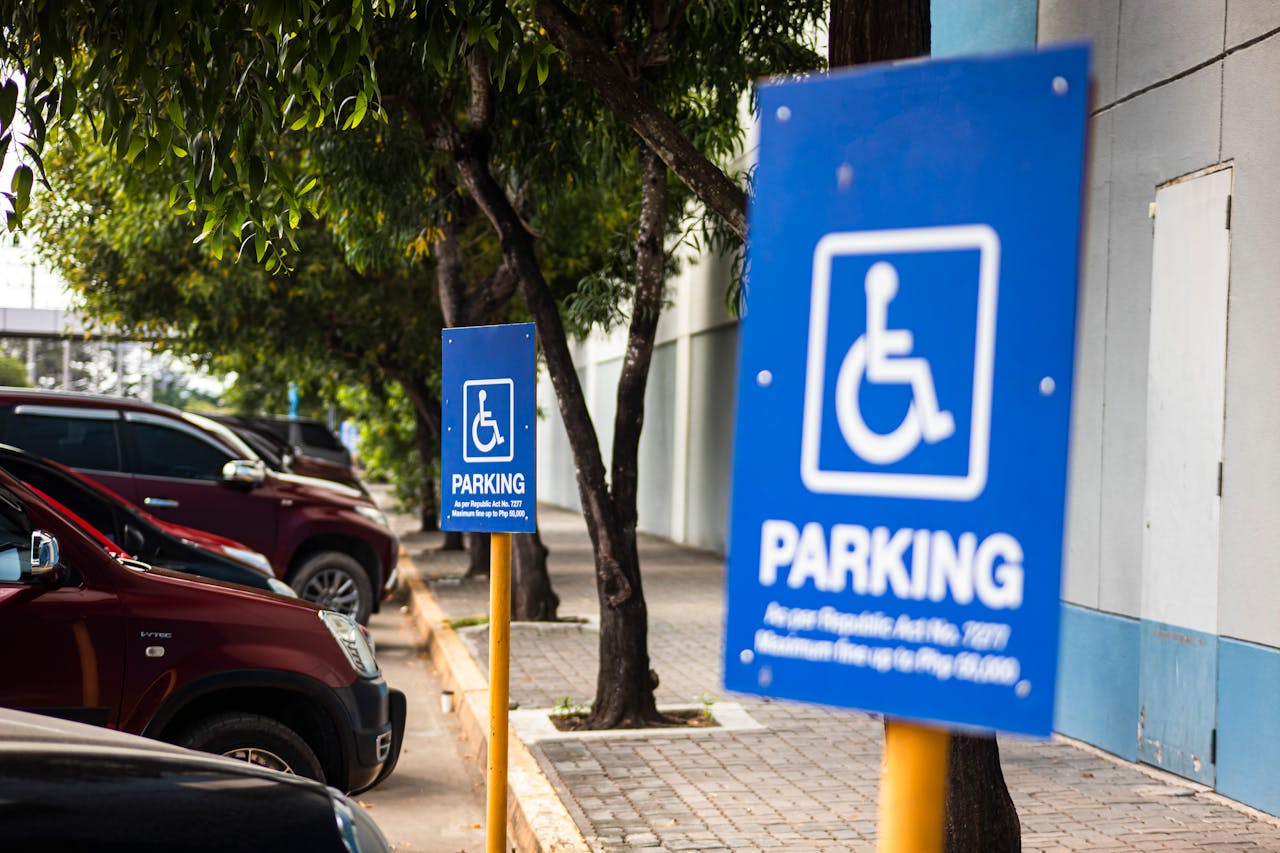
Handicapped parking signs designate spots for handicapped drivers. They must be prominent, employ an international symbol, and be ADA compliant for placement and contrast. Entrance signs should indicate accessible features such as ramps or automatic doors. Both exterior and interior signs need to meet mounting height and clear space requirements.
Input from building occupants is great for refining these signs. Going over placement and clarity regularly keeps signs effective and compliance current.
Beyond The Basics
Accessible signage is not just about adhering to the federal ADA sign requirements; it also involves understanding the specific requirements that cater to diverse populations. Schools, clinics, and offices must consider compliant signage that goes beyond the basics. By integrating tactile content and visual signs that meet ADA signage requirements, we can create inclusive environments that everyone can enjoy.
|
Technology |
Key Benefits |
Example Application |
|
Digital Displays |
Real-time updates, dynamic content |
Schedules in school lobbies, clinic wait times |
|
Tactile Signage |
Supports low vision and blind users |
Braille wayfinding in offices, raised icons in clinics |
|
Audio Announcements |
Accessible for all hearing levels |
Emergency alerts in schools, appointment calls in clinics |
|
Color Contrast Tools |
Improves visual clarity |
High-contrast directions in large office complexes |
Digital Displays
Digital signs revolutionize how information is communicated in communal areas, adhering to ADA signage requirements. These can display timely notices, schedules, and safety messages. For a school, this could translate into real-time class changes or lunch menus, ensuring compliant school signage. In clinics, digital boards can inform patients of wait times or health tips, while offices use them to display meeting room schedules and building news.
ADA compliance remains essential, as signs must meet specific ADA sign requirements like high contrast, large print, and strategic placement for users of all abilities. Audio output is a nice bonus, as it ensures that low vision and print-impaired users aren’t excluded from important information.
Digital signs are most effective when regularly refreshed. Old, stale content confuses visitors. Take, for instance, a clinic, where if it doesn’t update its wait list, patients may miss their appointment. IT teams or facility managers schedule checks and content refresh cycles.
Sensory Integration
Signage works better when it speaks to more than a single sense. Including tactile, auditory, and visual markers, passists individuals with various other needs. Raised letters or braille aid the low vision. Audio hints or voice navigation assist poor readers or the blind. Bright symbols and easy images make it all clear even for non-native speakers or toddlers.
All buildings must test whether folks are utilizing these amenities. A school, for instance, might query students and staff whether tactile maps or color-coded signs assist. In a clinic, feedback from patients with hearing loss could indicate whether sound alerts have an impact.
Collecting feedback is never a one-and-done process. Building managers or support staff should query users about what does and doesn’t work. This ensures signs continue assisting people as requirements shift.
Future-Proofing
To plan is not to chain yourself to a single method. Tech and standards shift quickly. Signs should be constructed in a way that they can adapt to new ADA regulations or technology innovations. With modular systems, such as sign holders that fit new panels, the staff can switch to improved choices as needed.
Building teams should monitor emerging accessibility trends. For instance, more locations are including QR codes on signs, allowing visitors to access details on their phones in their preferred language or with screen readers. Frequent audits of all signage nip problems before they turn into major issues. This habit keeps buildings in tune with emerging codes and real-world demands.
A Proactive Compliance Strategy
A proactive compliance strategy is about thinking forward and resolving potential ADA signage challenges before they become major headaches. For schools, clinics, and offices, this is more than a compliance exercise — it’s a tangible path toward cultivating trust and creating an environment where everyone feels secure and welcome. By maintaining an awareness of ADA signage requirements, conducting regular audits, and ensuring employees understand the importance, a company can stay ahead of changes and reduce the risk of penalties or reputational damage. It works best when everyone, from top leaders to daily staff, buys into the idea.
Ongoing audits lie at the heart of a robust compliance strategy. These inspections identify potential non-compliant signage, trails, and restrooms. In a clinic, this might involve verifying whether there are Braille signs outside of every exam room. In a school, it might be about ensuring that classroom numbers are marked with raised letters at the appropriate height, or if arrows and guides in corridors can be located and read by individuals with diminished vision. With audits on schedule — let’s say, every six months — problems can be resolved quickly, well before they attract external interest. That keeps risk low and demonstrates an authentic commitment to compliant signage.
Staying on top of ADA changes isn’t always easy. The regulations can change, and new industry best practices emerge. Through partnering with ADA specialists and consultants, they can remain updated. For instance, if new standards are released for tactile maps near elevators, these specialists can assist in getting modifications implemented immediately. Other locations utilize compliance management software to log signs, tag aged assets, and produce reports for convenient review. This tech-driven approach is time-saving and helps staff stay on top of fix follow-ups.
Training is another big piece in a proactive plan. Employees should understand the reason and methodology behind ADA signs, such as why a bathroom sign has to be fixed at a specific height or why color contrast is significant in an office lobby. Continued engagement, not one-time lectures, keeps the army primed to identify issues and assist rectification. In fast-paced environments such as hospitals, where regulations are rigid, training can determine whether a hospital remains open or closes its doors.
A robust compliance strategy involves creating a culture in which everyone feels accountable. When the leaders treat compliance as a shared value, not just a rule, it permeates the entire organization. Staff-spotter-and-fixer reward schemes, or open feedback forums for anyone to flag an issue, help establish this atmosphere. This culture is crucial for environments such as clinics and schools, where thousands of people depend on secure, unambiguous signs every day.
Conclusion
ADA signs don’t just designate a room or display a direction. In schools, crisp door and restroom signs make students feel secure and confident. Clinics have tough signs that lead patients rapidly, even in stress. Offices require crisp, clear signage to keep everything flowing and equitable for all. Proper font size, raised letters, and Braille for wayfinding build trust and smooth everyone’s day. Being smart now keeps you up to code and out of trouble down the road. Great signage defines accessible spaces, equitable access, and equal opportunity. Want to see if your building measures up? Do a walk around, identify what needs to be added, and take what you learned here to establish a clear course for everyone.
Frequently Asked Questions
1. What Are The Core Principles Of ADA Signage?
ADA signage must adhere to key ADA requirements by being readable, accessible, and easy to understand for all people, including those with disabilities. Compliant signage should incorporate clear fonts, high contrast, and braille where necessary.
2. Do Schools, Clinics, And Offices Have Different ADA Signage Needs?
Yes. Every building type has special needs corresponding to function and visitors. For example, schools require compliant school signage such as classroom and restroom signs, while clinics need clear directional signs for patient rooms and exits.
3. What Are The Key Technical Specifications For ADA Signs?
ADA signage must adhere to tactile requirements, incorporating tactile lettering, braille, and high-contrast colors. Compliance standards dictate specific mounting height and location, ensuring visibility with non-glare finishes.
4. Where Should ADA Signs Be Placed In A Building?
Ensure that compliant signage is placed at entrances, exits, restrooms, elevators, and important rooms, maintaining a consistent height and proximity to the doors they describe.
5. Why Is Compliance With ADA Signage Important?
Compliance with ADA signage requirements makes your space accessible to everyone, minimizes legal liability, and fosters an inclusive atmosphere, demonstrating respect for diversity and adherence to the law.
6. Can ADA Signage Be Customized To Match A Building’s Design?
Yes. ADA signage requirements are met through a wide range of custom colors, materials, and styles while still satisfying every technical and legal requirement.
7. How Often Should ADA Signage Be Reviewed Or Updated?
Check signage often, especially after renovations or rule changes, to ensure compliant signage and ADA compliance.

Turn Heads & Build Trust: Stunning Custom Building Signs That Speak For Your Brand
Your building isn’t just where you do business—it’s a powerful billboard for your brand. The right building sign doesn’t just mark your location; it tells your story, grabs attention, and invites customers in before they ever walk through the door. From bold exterior signage to sleek architectural elements, custom building signs can transform your visibility and make your brand unforgettable.
At It’s A Good Sign, we bring over 30 years of signage expertise to every project, creating eye-catching, professional building signs that are built to impress and made to last. Whether you’re after dimensional letters, illuminated signs, or architectural signage that aligns with your brand’s personality, we deliver custom-crafted solutions backed by a nationwide network of trusted experts.
From the first sketch to final installation, we handle every step with care and precision, ensuring your sign doesn’t just look great, but performs flawlessly for years to come. When you invest in a high-impact building sign, you’re investing in more than visibility—you’re investing in credibility, customer confidence, and a standout presence in your community.
Ready to turn your building into a brand statement? Contact It’s A Good Sign today and let’s create something extraordinary together.
Disclaimer
The materials provided on this website are for informational and entertainment purposes only and are not intended to serve as professional advice. You should consult a qualified professional for advice specific to your unique circumstances or needs. Do not act or refrain from acting based on the content on this website without seeking appropriate guidance from an expert in the relevant field.
The information presented here may not reflect the latest developments in signage, design, or related industries. We disclaim all liability for any actions taken or not taken based on the content of this website to the fullest extent permitted by law.